Alexandra Castaño
New York Hispano
January 29, 2026
Translated from Spanish
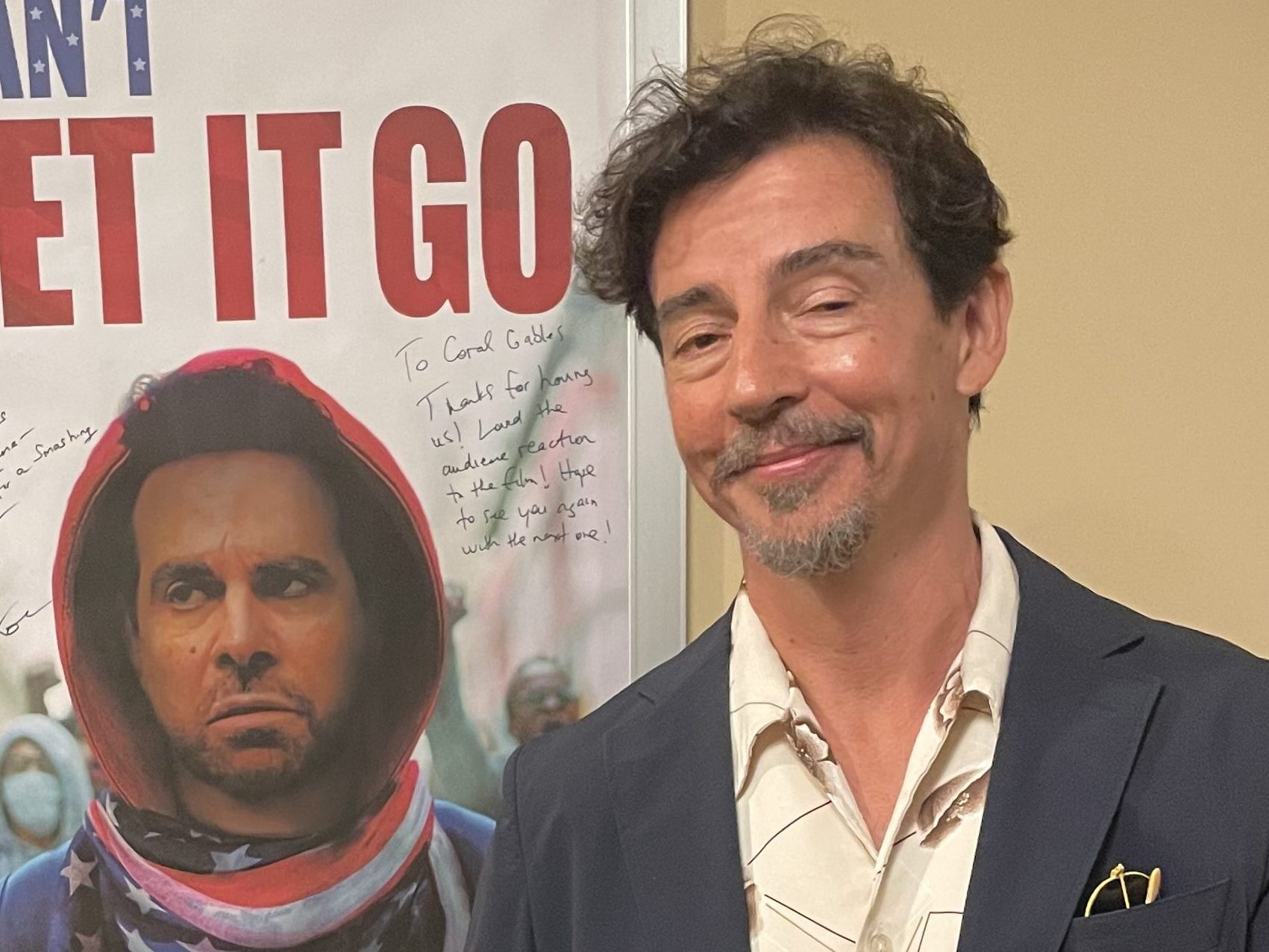
A political comedy that exposes the polarization in the Trump era and how it affects immigrant families, especially Hispanic ones, in New York and the United States.
Can’t Let It Go is a film by New York filmmaker and director Roy Szuper that, in Spanish, means I Can’t Get Over It, and which attempts to create a reflection on what the New York community and the immigrant community have been experiencing since the first election of Donald Trump in 2016.
Szuper decided to express the emotional hangover felt by the New York community the day after the 2016 election, which led to his first short film, in which he starred. “I woke up the day after the election and felt like I had an emotional hangover, and I realized there was a general hangover throughout New York City, and I wanted to capture that moment through a short film,” Szuper says.
Szuper explains that this short film tells the story of a character based on himself who tries to go to a yoga class to forget about the elections, and during his journey, comical situations unfold that reflect his frustration and dissatisfaction with what happened. “When we presented this short film, it was very well received because people connected with that moment, with that emotional hangover, and that’s how I realized I had struck a chord,” says Szuper.
According to him, Mario Cantone, best known for his role as Anthony Marentino in the series Sex and the City, saw the short film, liked it, and asked Szuper to make a part about him. “I based it on the yoga scene and tried to go back and imagine other characters and their backgrounds, and that’s how I started the film,” he says. He adds that Colombian cinematographer Miguel Amortegui, co-producer of the film, helped him write the five stories. “We imagined different scenarios and included a Hispanic story,” he explains.
Szuper prefers to call his film a political comedy. He points out that it’s not specifically about Trump, but rather the movement that arose around him and
the disputes and disagreements this political moment has provoked within the community and among families. “A polarization is being created that didn’t exist before. Before Trump, people could sit down and talk about politics in a more neutral and peaceful way. Now everything is so tribal; he has polarized people and dehumanized Democrats,” the filmmaker asserts. In his opinion, political debate has become personal, and the film focuses on the disputes that have arisen among citizens because of Trump.
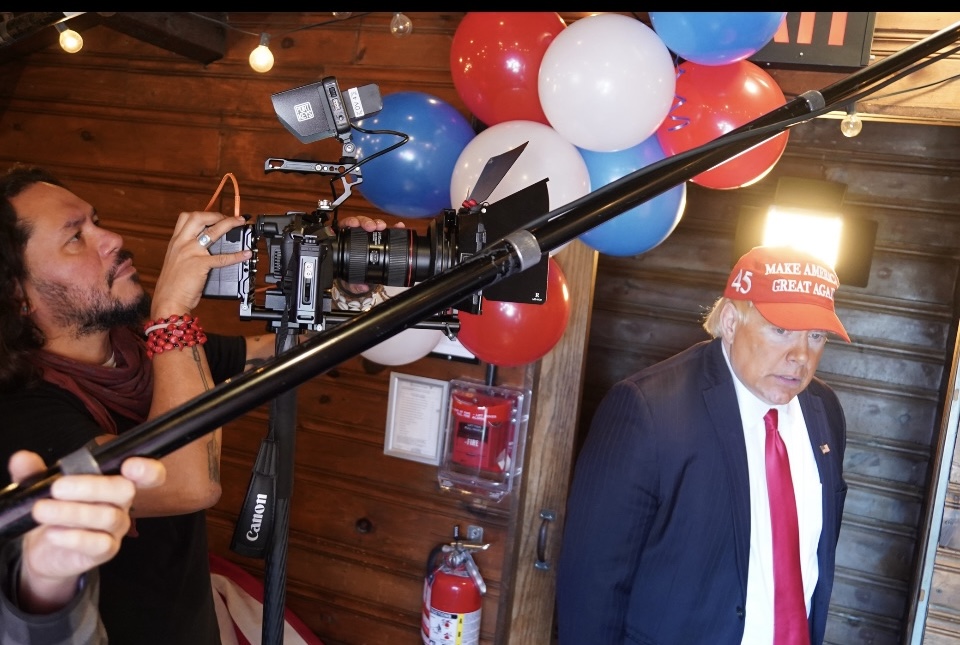
In his Hispanic vignette, Szuper depicts a Cuban family consisting of a father and his daughter. The filmmaker explains that the young woman’s character is based on Alexandria Ocasio-Cortez (AOC). She is a left-leaning character who, like the congresswoman, worked as a bartender and currently works for Bernie Sanders’ campaign, in contrast to her father, a Trump supporter.
Szuper points out that this scene reflects the political conflicts many Hispanic families in the United States are currently experiencing. “It surprises me that so many Hispanics voted for Trump. Especially Hispanic men,” he states. According to the filmmaker, the fundamental idea behind this scene was to show a political dialogue between a deeply conservative Cuban father and an idealistic, left-leaning daughter, addressing topics such as Cuba, Venezuela, and Trump within the same conversation. “The idea of the film is to show how Trump divides people and to create a debate and reflection,” he notes.
According to Szuper, the film’s screening in Miami sparked a debate with participants from Venezuela, Cuba, and Puerto Rico. He highlighted the intensity of the discussion and noted that among the attendees was a Venezuelan woman, a Trump supporter, who believed the election was necessary for the country’s improvement. Meanwhile, a Cuban participant, an anti-Castro activist who emigrated to the United States in the 1960s, had been a Republican for 20 years and served in the U.S. military, but decided to leave the party due to its inconsistency. Szuper found this testimony striking because he had expected a more conservative commentary and realized that many Hispanics identified with the scene. In his view, the Hispanic vignette in the film was the most profound due to its political and philosophical content.
Szuper explains that as a first-generation New Yorker from a Polish family, he feels a deep empathy for the Hispanic immigrant community. For him, what is currently happening to immigrants is atrocious. “They do so many good things for the city; without them, New York would collapse,” the filmmaker asserts, explaining that each generation has been marked by the arrival of immigrants from different corners of the world, which, in his view, makes them relevant. “Immigrants are part of our lives and our very being,” he says.
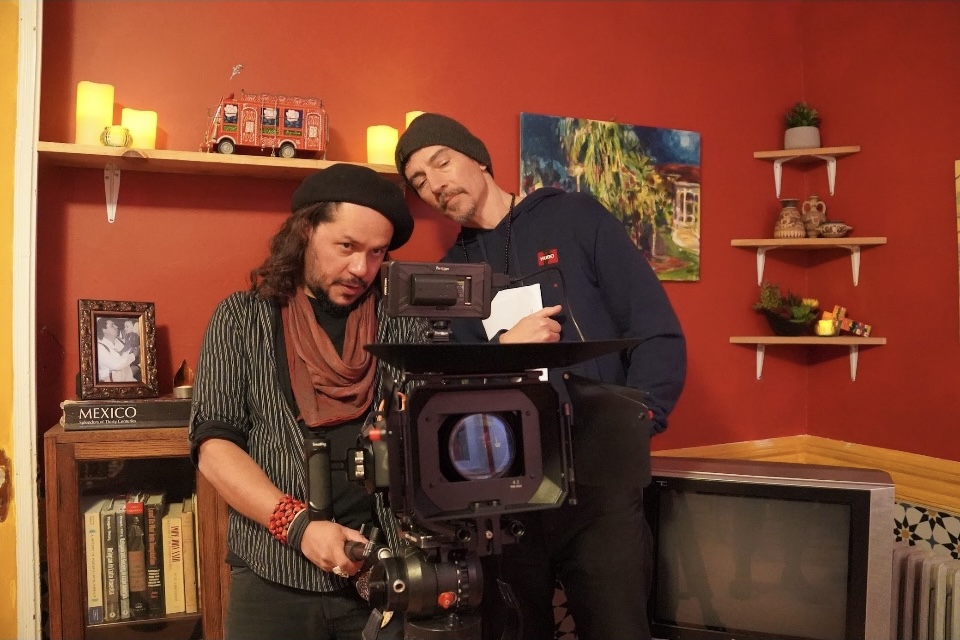
Hispanics in the Film
Omar Villegas, of Guatemalan descent and one of the film’s lighting designers, points out that the Hispanic community is divided because of Trump and that, in his opinion, this division may not be accidental. He adds that Hispanics are becoming increasingly divided. “Even within our families there is a division and a difference in the way political information is processed,” he asserts.
Villegas points out that art forms like film can foster reflection within the Hispanic community that voted for Trump. “Unfortunately, there are many people in our communities who are very conservative and don’t perceive the risk, either because they choose not to see it or because they are afraid to confront it,” he states.
According to Villegas, artists have a responsibility to show what is happening and create conversations around it. In his opinion, it is very important to listen to other perspectives and not rely on a single source of information, but rather go out and explore other conversations. “The community needs to wake up,” he emphasizes.
Can’t Let It Go will be shown on February 6, 7, and 8 at Stuart Cinema & Café in Brooklyn, located at 79 West St, Brooklyn, NY 11222. All screenings will conclude with a Q&A session with director Roy Szuper and Mario Cantone. https://szuperfilms.com/
Can’t Let It Go Debate y Reflexión
Alexandra Castaño
New York Hispano
January 29, 2026
Una comedia política que expone la polarización en la era Trump y cómo afecta a familias inmigrantes, especialmente hispanas, en Nueva York y Estados Unidos
Can’t Let It Go es la película del cineasta y director neoyorquino, Roy Szuper que en español quiere decir No puedo superarlo y que intenta crear una reflexión sobre lo que ha estado viviendo la comunidad neoyorquina y la comunidad inmigrante desde la primera elección de Donald Trump en el 2016.
Szuper decidió expresar el sentimiento de resaca emocional de la comunidad neoyorquina al despertarse al día siguiente de las elecciones del 2016 lo que dio origen a su primer corto cinematográfico donde él mismo era el protagonista. “Me levanté al otro día de las elecciones y me sentí con una sensación de resaca emocional y me di cuenta que había una resaca general en toda la ciudad de Nueva York y quería capturar ese momento a través de una película corta”, afirma Szuper.
Szuper relata que este cortometraje es la historia de un personaje basado en él que intenta ir a la clase de Yoga para olvidar las elecciones y durante su trayecto se desencadenan situaciones cómicas que reflejan su frustración e inconformidad con lo acontecido. “Cuando presentamos este cortometraje tuvo una gran acogida porque las personas se conectaron con ese momento, con esa resaca emocional y fue así que me di cuenta de que había tocado un nervio”, afirma Szuper.
De acuerdo con él, Mario Cantone, más conocido por su papel de Anthony Marentino en la serie Sex and the City vio el cortometraje y le gustó y le pidió a Szuper hacer una parte sobre él. “Me basé en la escena de Yoga e intenté devolveme e imaginar otros personajes y su procedencia y así comencé la película”, afirma. Según él, el Colombiano Miguel Amortegui, director de fotografía y co-productor de la película le ayudó a escribir las 5 historias. “Nos imaginamos diferentes escenarios e incluimos una historia hispana”, expresa.
Szuper prefiere llamar su película comedia política. Señala que no se trata específicamente de Trump sino del movimiento que se generó en torno a él y de
las disputas y desacuerdos que este momento político ha provocado entre la comunidad y las familias. “Se está creando una polarización que no existía. Antes de Trump la gente se podía sentar a hablar sobre política de una manera más neutra y pacífica. Ahora todo es tan tribal, él ha polarizado a las personas y deshumanizado a los demócratas”, asegura el cineasta. En su opinión, el debate político se ha vuelto personal, y la película se centra en las disputas surgidas entre la ciudadanía debido a Trump.
En su viñeta hispana, Szuper representa a una familia cubana compuesta por el padre y su hija. El cineasta explica que el personaje de la joven está basado en Alexandria Ocasio-Cortez (AOC). Se trata de un personaje de izquierda, que, como la Congresista, trabajó como cantinera y actualmente trabaja para la campaña de Bernie Sanders, en contraste con su padre, un partidario de Trump.
Szuper señala que esta escena refleja los conflictos políticos que atraviesan muchas familias hispanas actualmente en Estados Unidos. “Me extraña que tantos hispanos votaran por Trump. Especialmente hombres hipanos”, afirma. Según el cineasta, la idea fundamental de esta escena era mostrar un diálogo político entre un padre cubano profundamente conservador y una hija idealista de izquierda en el que se abordan temas como Cuba, Venezuela y la figura de Trump dentro de un mismo diálogo. “La idea de la película es mostrar cómo Trump divide a la gente y crear un debate y una reflexión”, señala.
Según Szuper, la presentación de la película en Miami propició un debate con participantes de Venezuela, Cuba y Puerto Rico. Destacó la intensidad de la discusión y señaló que entre los asistentes había una mujer venezolana simpatizante de Trump, quien consideraba que esta elección era necesaria para que el país mejorara. Por su parte, un participante cubano, anticastrista, que emigró a Estados Unidos en los años sesenta, fue republicano por 20 años, y formó parte del ejército americano, decidió abandonar el partido por su inconsistencia. Szuper encontró este testimonio impactante porque esperaba un comentario más conservador y se dio cuenta que muchos hispanos se identificaban con la escena. A su modo de ver, la viñeta hispana de la película fue la más profunda por su contenido político y filosófico.
Szuper explica que como neoyorquino de primera generación y proveniente de una familia de origen polaco, siente una profunda empatía hacia la comunidad inmigrante hispana. Para él, lo que actualmente está pasando con los inmigrantes es atroz. “Ellos hacen tantas cosas buenas por la Ciudad, sin ellos Nueva York colapsaría”, asegura el cineasta y explica que cada generación ha estado marcada por la llegada de inmigrantes procedentes de distintos rincones del mundo, lo que, a su juicio, los hace relevantes. “Los inmigrantes hacen parte de nuestras vidas y de nuestras fibras”, expresa.
Hispanos en la película
Omar Villegas, de ascendencia Guatemalteca, y uno de los diseñadores de iluminación de la película, señala que la comunidad hispana está dividida debido a Trump y que, en su opinión, esta división tal vez no sea casual. Agrega que los hispanos están cada vez más divididos. “Hasta en nuestras familias existe una división y una diferencia en la manera en que se procesa la información política”, asegura.
Villegas señala que formas de arte como el cine pueden fomentar la reflexión dentro de la comunidad hispana que votó por Trump. “Desafortunadamente, hay muchas personas en nuestras comunidades que son muy conservadoras y que no perciben el riesgo, ya sea porque eligen no verlo o porque tienen miedo de enfrentarlo”, afirma.
De acuerdo con Villegas, los artistas tienen la responsabilidad de mostrar lo que está pasando y crear conversaciones en torno a ello. En su opinión, es muy importante escuchar otras perspectivas y no recurrir a una sola fuente de información, sino salir y explorar otras conversaciones. “La comunidad tiene que despertar», enfatiza.
Can’t Let It Go se presentará los días 6,7 y 8 de febrero en el Stuart Cinema & Café en Brooklyn en la 79 West St, Brooklyn, NY 11222. Todas las presentaciones finalizarán con una sesión de preguntas con el director Roy Szuper y Mario Cantone. https://szuperfilms.com/